Thoughts for the Day
Wednesday, 22nd July 2026: For the love of Christ!
Redemption 2 Corinthians 5 Anointed One Christ Messiah Saviour
Reading : Verses from 2 Corinthians, Chapter 5
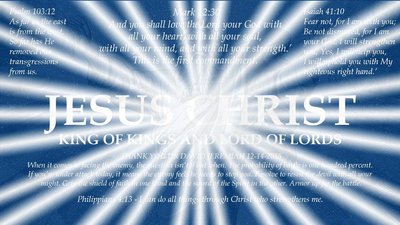
For the love of Christ urges us on, because we are convinced that one has died for all; therefore all have died. And he died for all, so that those who live might live no longer for themselves, but for him who died and was raised for them.
From now on, therefore, we regard no one from a human point of view; even though we once knew Christ from a human point of view, we know him no longer in that way. So if anyone is in Christ, there is a new creation: everything old has passed away; see, everything has become new!
(Lectionary, New Revised Standard Version)
Thoughts
I have done a multitude of jobs mixing with many people - pick-axing hardcore to make a drive-way; picked peas and potatoes in fields for weeks until I thought my back would break; and stood in the local pub arguing with angry villagers. What's this got to do with anything? Well let's say they are all places where a lot of swearing occurred. Mine was "Dam!" which seemed mild as I didn't connect it to "Damnation" (ie Hell) and which mightily upset some people who did. A phrase that occurred when somebody made a mistake was frequently ''For the love of Christ!" or just "Christ!". Both of which upset me mightily!
The word "Christ" comes from 'Christos', a Greek word that means “the Anointed one,” or “the Chosen one.” The Hebrew word word for this is 'Mashiach', ie "Messiah". So "Christ" is really more a title than a name. In Matthew 16.6 Peter said to Jesus: “You are the Christ, the Son of the living God”. So "Jesus Christ" combines His name (Jesus) with His title (Christ). The Hebrew scriptures predicted that God would send a chosen one, the Messiah, to save the world from sin. By the time of Jesus though they believed the Messiah would come to set up a kingdom on earth and deliver them from their Roman masters. But in the synagogue in Nazareth Jesus was to say that he came to "heal the broken-hearted, to proclaim liberty to the captives and recovery of sight to the blind, to set at liberty those who are oppressed; to proclaim the acceptable year of the Lord." (Lk 4.17-21)
In the Old Testament, those who were set apart by God for spiritual or political leadership were anointed with oil as a symbol of their authority. The New Testament records two occasions that Jesus was anointed with oil (Matthew 26.6-7 and Luke 7.37-38), and by God through the Holy Spirit at his baptism by John, (John 1.24-32).
So as the Christ, Jesus was God’s anointed One who fulfilled the Old Testament prophecies; he was also the chosen One who came to save us from the penalties of our sin; and he was the One who promised to come again to usher us into his everlasting kingdom. That's whom we refer to when we use the word "Christ"!
Prayer
Lord Jesus Christ,
when we use Your name and Your title
may we do so with reverence,
and with understanding,
as befits the Son of God,
who was chosen as the Messiah,
and who was anointed for the task of freeing us.
from the clinging danger of our sin.
Amen.
You might like to play this:
- In Christ alone (Adrienne Liesching): Hadleigh Baptist Church
- Jesus is Lord, Creation's voice proclaims it (Chet Valley Hymns and Songs)