Thoughts for the Day
Saturday, 2nd May 2026: Eastertide - John, 17
John 14 Son of God Sign Eastertide Jesus
Reading : Verses from John, Chapter 14
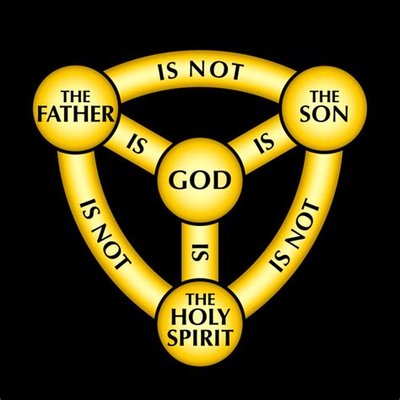
Jesus said, 'If you know me, you will know my Father also. From now on you do know him and have seen him.’
Philip said to him, ‘Lord, show us the Father, and we will be satisfied.’ Jesus said to him, ‘Have I been with you all this time, Philip, and you still do not know me? Whoever has seen me has seen the Father. How can you say, “Show us the Father”? Do you not believe that I am in the Father and the Father is in me? The words that I say to you I do not speak on my own; but the Father who dwells in me does his works. Believe me that I am in the Father and the Father is in me; but if you do not, then believe me because of the works themselves. Very truly, I tell you, the one who believes in me will also do the works that I do and, in fact, will do greater works than these, because I am going to the Father. I will do whatever you ask in my name, so that the Father may be glorified in the Son. If in my name you ask me for anything, I will do it.
(Lectionary, New Revised Standard Version)
Thoughts
As we look back at Jesus' life on earth from the perspective of post Easter and His resurrection we can see certain themes occurring in John's Gospel. One of these is the unity and close relationship between Jesus and the Father. We see this in today's passage, where Philip questions Jesus and is given the answer "Whoever has seen me has seen the Father." A few days ago we saw in John, Chapter 10, that Jesus said something similar, "I and the Father are one." This will be picked up again in the future when we come to look at the Trinity. It's enough to know now that Jesus is fully divine and one with God.
But if we cannot accept this notion of total unity between God the Father and Jesus, the latter gives us a way out for he appeals to his miracles and works as evidence of his divine authority and his identity. Throughout the Gospel of John, Jesus' works are called 'signs', rather than 'miracles' and they serve as signs pointing to his divine nature and to his mission. Prophets like Isaiah had forewarned the people about the coming Messiah, who would enable the blind to see, the deaf to hear, and the lame to walk (Isaiah 35.5-6). Jesus was to do all this, as well as many other signs, among them to turn water into wine (John 2.1-11) and raise Lazarus from the dead (John 11.1-44). These are acts not just carried out because of Jesus' compassion for people, they are also signs designed to reveal Jesus as the Son of God.
So where does this leave those Christians who struggle with the Father and Son as One? Well firstly John invites believers to trust in Jesus' divine identity and his mission. Secondly as one wise person told me many years ago "While you struggle with idea of Jesus and the Father as One God others will hold alive this belief until you can fully trust in Jesus' words.
Prayer
Lord Jesus,
You taught Your disciples that You and the Father are One.
Sometimes we struggle to believe what seems impossible,
and ask You to give us greater faith
to take on trust Your words.
Then may we get on with living out our faith in the world,
content with the work You have given us,
knowing that one day the answers will be given.
Amen.
You might like to read this:
- How is Jesus both God and one with Him? (Bible Hub)