Thoughts for the Day
Friday, 18th September 2026: Acts - Day 37
Jews Acts 18 Paul Gentiles Symbols
Reading : Verses from Acts, Chapter 18
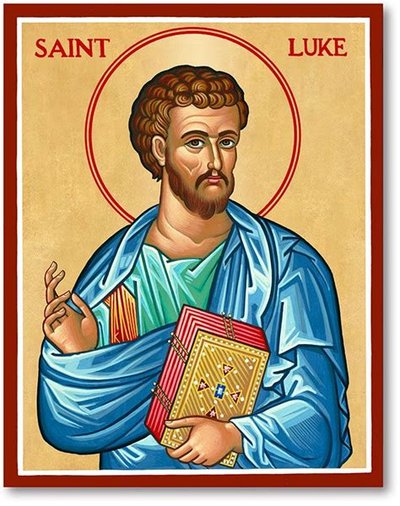
Paul in Corinth
After this Paul left Athens and went to Corinth. There he found a Jew named Aquila, a native of Pontus, who had recently come from Italy with his wife Priscilla, because Claudius had ordered all Jews to leave Rome. Paul went to see them, and, because he was of the same trade, he stayed with them, and they worked together - by trade they were tentmakers. Every sabbath he would argue in the synagogue and would try to convince Jews and Greeks.
When Silas and Timothy arrived from Macedonia, Paul was occupied with proclaiming the word, testifying to the Jews that the Messiah was Jesus. When they opposed and reviled him he shook the dust from his clothes and said to them, ‘Your blood be on your own heads! I am innocent. From now on I will go to the Gentiles.’ Then he left the synagogue and went to the house of a man named Titus Justus, a worshipper of God; his house was next door to the synagogue. Crispus, the official of the synagogue, became a believer in the Lord, together with all his household; and many of the Corinthians who heard Paul became believers and were baptized. One night the Lord said to Paul in a vision, ‘Do not be afraid, but speak and do not be silent; for I am with you, and no one will lay a hand on you to harm you, for there are many in this city who are my people.’ He stayed there for a year and six months, teaching the word of God among them.
(Lectionary, New Revised Standard Version)
Thoughts
At the beginning of Chapter 18 of the 'Book of Acts' we see that Paul is intensifying the focus of his ministry, by devoting himself almost exclusively to teaching the Jews that Jesus is the Christ. Having left Athens and travelled to Corinth we see he is staying with Aquila and his wife Priscilla, and earning his living by working alongside them, making tents. Each Sabbath he shares the Gospel message with those at the local Synagogue but when there is a hostile response Paul takes some drastic action. We read:
- 'When they opposed and reviled him, in protest he shook the dust from his clothes and said to them, "Your blood be on your own heads! I am innocent. From now on I will go to the Gentiles".'
A similar action was taken by Nehemiah when exiles returned to rebuild Jerusalem and the locals unfairly distribute grain to the newcomers (Nehemiah Chapter 5). Having sorted out the problem Nehemiah says:
- 'I also shook out the fold of my garment and said, "So may God shake out everyone from house and from property who does not perform this promise. Thus may they be shaken out and emptied".’
The symbolic message is clear to all who reject the message. The responsibility of rejecting God's message lies with those who refuse to hear God's word. Paul has fulfilled his duty as a faithful witness, and such rejection will bring divine judgment at some point!
Prayer
Lord God,
sometimes Your ministry is blocked
and we must move on,
but only when we have truly done our best
and sought Your help at every stage.
Teach us then to leave things with You
and continue Your work elsewhere.
Amen.
You might like to look at some other symbolic gestures in the Bible:
- Symbolic gestures of judgment (Bible Hub)