Thoughts for the Day
Wednesday, 16th September 2026: Acts - Day 35
Silas Challenges Paul Opposition Acts 17
Reading : Verses from Acts, Chapter 17
The Uproar in Thessalonica
After Paul and Silas had passed through Amphipolis and Apollonia, they came to Thessalonica, where there was a synagogue of the Jews. And Paul went in, as was his custom, and on three sabbath days argued with them from the scriptures, explaining and proving that it was necessary for the Messiah to suffer and to rise from the dead, and saying, ‘This is the Messiah, Jesus whom I am proclaiming to you.’ Some of them were persuaded and joined Paul and Silas, as did a great many of the devout Greeks and not a few of the leading women. But the Jews became jealous, and with the help of some ruffians in the market-places they formed a mob and set the city in an uproar. While they were searching for Paul and Silas to bring them out to the assembly, they attacked Jason’s house. When they could not find them, they dragged Jason and some believers before the city authorities, shouting, ‘These people who have been turning the world upside down have come here also, and Jason has entertained them as guests. They are all acting contrary to the decrees of the emperor, saying that there is another king named Jesus.’ The people and the city officials were disturbed when they heard this, and after they had taken bail from Jason and the others, they let them go.
Paul and Silas in Beroea
That very night the believers sent Paul and Silas off to Beroea; and when they arrived, they went to the Jewish synagogue. These Jews were more receptive than those in Thessalonica, for they welcomed the message very eagerly and examined the scriptures every day to see whether these things were so. Many of them therefore believed, including not a few Greek women and men of high standing. But when the Jews of Thessalonica learned that the word of God had been proclaimed by Paul in Beroea as well, they came there too, to stir up and incite the crowds. Then the believers immediately sent Paul away to the coast, but Silas and Timothy remained behind. Those who conducted Paul brought him as far as Athens; and after receiving instructions to have Silas and Timothy join him as soon as possible, they left him.
(Lectionary, New Revised Standard Version)
Thoughts
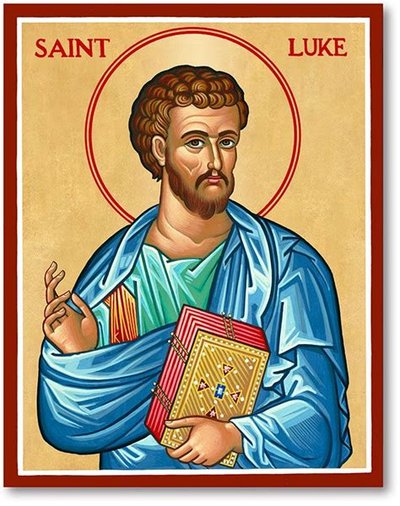
In today's passage from Chapter 17 of Luke's 'Acts of the Apostles' we see Paul and Silas continuing to spread the teachings of Jesus, this time in Thessalonica, Berea, and Athens. They face continual opposition but also come across some people who are open to the message of the Gospel, particularly among the Gentile population. Despite the opposition their persistence and faith continues to spread the word of God.
I have never felt physically threatened because of my faith but have faced a lot of opposition. The first was to be mocked by others in the Youth Club for attending church, which at the time hurt. At other times it was more serious. In the 1980s I made a conscious decision not to engage with the Movement for the Ordination of Women, despite believing that God was calling me to be a deacon and a priest. It wasn't cowardice, but I knew it would bring out the worst characteristics in me. The biggest opposition came in 1993-94 with anonymous letters calling me by a lot of unprintable names, alongside a choir that turned their back on me at the Peace, as well as aggressive speech in public meetings, and a host of other nasty things. Thinking back now I realise how much I felt supported by the power of Holy Spirit, just to keep working in ministry as the whirlwind flew around my head.
Have you ever faced opposition when sharing your beliefs or values with others? How did you handle this? Paul’s example should teach us how important it is to be true to our convictions and continue to share our faith even when faced with challenges, for there will always be people open to God's message.
Prayer
Lord Jesus Christ,
through Your Holy Spirit
give us the faith to speak Your word to others,
give us the courage to face any criticism,
and give us the strength to keep on sharing Your love
with those we meet this day.
Amen.
You might like to read this:
- Handling criticism with grace (Bible Hub)
Or play this:
- Father hear the prayer we offer (Saint Peter's Anglican Church)