Thoughts for the Day
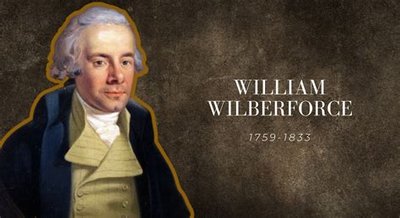
Thursday, 30th July 2026: William Wilberforce, Social Reformer, 1833
Luke 4 William Wilberforce Slavery Social reformer Wilberforce
Reading : Verses from Luke, Chapter 4
When he came to Nazareth, where he had been brought up, he went to the synagogue on the sabbath day, as was his custom. He stood up to read, and the scroll of the prophet Isaiah was given to him. He unrolled the scroll and found the place where was written:
‘The Spirit of the Lord is upon me,
because he has anointed me
to bring good news to the poor.
He has sent me to proclaim release to the captives
and recovery of sight to the blind,
to let the oppressed go free,
to proclaim the year of the Lord’s favour.’
And he rolled up the scroll, gave it back to the attendant, and sat down. The eyes of all in the synagogue were fixed on him. Then he began to say to them, ‘Today this scripture has been fulfilled in your hearing.’
(Lectionary, New Revised Standard Version)
Thoughts
Isaiah's words spoken by Jesus are as relevant today as they were so long ago, especially regarding "captives", or as we might now say "modern-day slavery" when we speak of those trapped to work in car-wash garages or as sex slaves. St Wulfstan faced those who brought slaves into the Bristol port in the 12th century, and in the 19th century William Wilberforce sought to eradicate slavery. Here is his story:
William Wilberforce was a British politician and philanthropist who sought to abolish the slave trade in Britain and its colonies. He was a keen supporter of parliamentary reform as well as Roman Catholic political emancipation which would allow the latter to vote, among other things. His views were derived in part from evangelical Christianity, as well as his close friendship with John Newton a former slave trader who had repented and who had been the pastor at his church when he was a child.
In the House of Commons, Wilberforce was an eloquent sponsor of antislavery legislation. In 1789 he introduced 12 resolutions against the slave trade giving what many newspapers at the time considered the most eloquent speeches ever delivered. The resolutions were supported by Pitt the Prime Minister, but failed to be carried out. In 1792 Wilberforce, supported by hundreds of thousands of British subjects who had signed petitions favouring the abolition of the slave trade, put forward another motion. However, a compromise measure was passed, much to his disappointment. For 15 years because of war with Napoleon nothing changed, but in 1807, he finally achieved success. On February 23rd a bill to abolish the slave trade in the British West Indies was carried in the House of Commons by 283 to 16, accompanied by a chorus of "Hurrahs" for Wilberforce. It became law on March 25th 1807. Full freedom was not to occur until July 26th 1833. Wilberforce died three days later! He was interred at Westminster Abbey.
Prayer
Collect from the Episcopal Church
Let your continual mercy, O Lord, kindle in your Church the never-failing gift of love; that, following the example of your servant William Wilberforce, we may have grace to defend the poor, and maintain the cause of those who have no helper; for the sake of him who gave his life for us, your Son our Saviour Jesus Christ, who lives and reigns with you and the Holy Spirit, one God, now and for ever. Amen.
You might like to read this:
- Modern day slavery (Salvation Army)