Thoughts for the Day
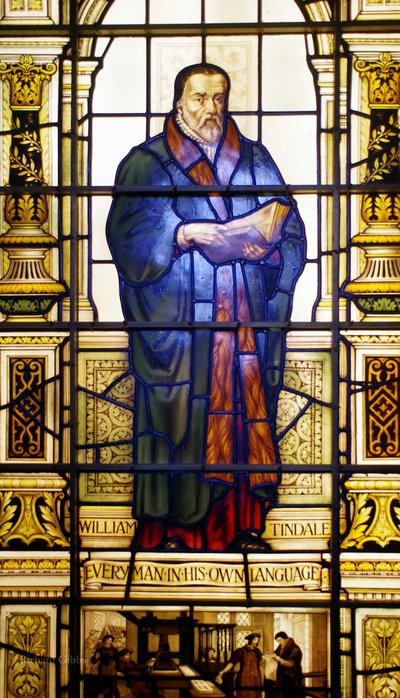
Tuesday, 6th October 2026: William Tyndale, Translator and Martyr, 1536
Martyr William Tyndale Translator Proverbs 8
Reading : Verses from Proverbs, Chapter 8
To you, O people, I call,
and my cry is to all that live.
O simple ones, learn prudence;
acquire intelligence, you who lack it.
Hear, for I will speak noble things,
and from my lips will come what is right;
for my mouth will utter truth;
wickedness is an abomination to my lips.
All the words of my mouth are righteous;
there is nothing twisted or crooked in them.
They are all straight to one who understands
and right to those who find knowledge.
Take my instruction instead of silver,
and knowledge rather than choice gold;
for wisdom is better than jewels,
and all that you may desire cannot compare with her.
(Lectionary, New Revised Standard Version)
Thoughts
Today we are becoming paranoid about truth. Social media, AI, and ignorance, are causing us to doubt much of what we believe about events in the world, leaving the way open for unscrupulous people to whip up mob violence. It's not easy to decide what is truth, though as Christians we would want to say that truth is to be found in the Bible. For 48 days we have looked at what the early church, notably Paul and Luke, argued was truth - that Jesus was the Messiah come to save our world. Now we look at how one man, 1,500 years later, argued that this truth needed to be written in a language that ordinary people could understand, and how he and many others were branded as heretics.
In the 16th century most people were reliant on their local priest to understand the Bible for it was written in Latin. William Tyndale who was educated at Oxford University and later moved to Cambridge University, became convinced that the Bible should determine the practices and doctrines of the Church and that all believers should be able to read it in their own language. In 1523 he began translating the New Testament directly from the original Greek rather than Latin. His work was to see him hounded across Britain and Europe by the Church authorities. Eventually he was captured, condemned for heresy, and executed by strangulation before being burned at the stake at Vilvoorde in 1536.
The spread of the printing press meant that at the time of his death, 18,000 copies of his New Testament had been printed; however, only two complete volumes and a fragment remain today. Tyndale’s greatest achievement was his ability to balance his understanding as a scholar, with a simplicity of expression. His work was to serve as the model for future English versions for nearly 400 years, beginning with the King James version of 1611.
Prayer
Collect
Lord, give your people grace to hear and keep your word,
that, after the example of your servant William Tyndale
we may not only profess your gospel
but also be ready to suffer and die for it,
to the honour of your name;
through Jesus Christ Your Son our Lord.
Amen.
If you haven't thought about which Bible to use:
- Look at any Bible you possess - what is it - King James; Good News; New International version; or what?
- Try a famous parable like the Lost sheep (Luke 16.1-7) in different versions of the Bible, using Bible Gateway (it's free). For example the Amplified Bible (Luke 15.1-7) and the Easy to Read Version (Luke 15.1-7),.