Thoughts for the Day
Sunday, 18th October 2026: Luke, the Evangelist (2026)
Luke Saint Luke Gospel Acts Saint Luke 10
Reading : Verses from Luke, Chapter 10
After this the Lord appointed seventy others and sent them on ahead of him in pairs to every town and place where he himself intended to go. He said to them, ‘The harvest is plentiful, but the labourers are few; therefore ask the Lord of the harvest to send out labourers into his harvest. Go on your way. See, I am sending you out like lambs into the midst of wolves. Carry no purse, no bag, no sandals; and greet no one on the road. Whatever house you enter, first say, “Peace to this house!” And if anyone is there who shares in peace, your peace will rest on that person; but if not, it will return to you. Remain in the same house, eating and drinking whatever they provide, for the labourer deserves to be paid. Do not move about from house to house. Whenever you enter a town and its people welcome you, eat what is set before you; cure the sick who are there, and say to them, “The kingdom of God has come near to you.”
(Lectionary, New Revised Standard Version)
Thoughts
We have looked at Saint Luke's work, The Acts of the Apostles', recently. Today we celebrate the Feast of St Luke.
As a child I remember clowns putting up posters advertising a local circus. In the days before everyone had a television or a phone, this was a good way of getting news out. Jesus sent out 70 apostles to ensure that people would be ready to receive him. Luke's Gospel is the only one with this story though the other Gospels have something similar.
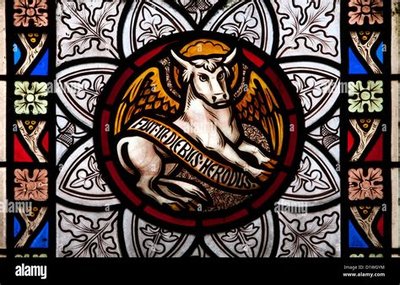
We call Luke an 'Evangelist'. Evangelists didn't have the authority of an apostle, nor the gift of prophecy, nor pastoral care for others. They were often preachers, taking the gospel to new places. All four writers of the Gospels are known as Evangelists, but Luke also wrote the Book of Acts.
Paul describes Luke as "the beloved physician", and he was probably a Gentile. His Gospel has a special care for women, and outcasts. Look at some of the stories known only from his Gospel: the Good Samaritan (Luke 10.25-37) and the Prodigal Son (Luke 15.11-32); and the healings, like the Ten Lepers (Luke 17.11-19), and the Widow of Nain's Son (Luke 7.11-17). Without his account of the Nativity stories of Jesus and John the Baptist, our understanding of Jesus would be much poorer. Today, can we spend some time re-reading a few of these stories, and thanking God for His servant Luke?
Prayer
Collect
Almighty God,
You called Luke the physician,
whose praise is in the gospel,
to be an evangelist and physician of the soul:
by the grace of the Spirit
and through the wholesome medicine of the gospel,
give Your Church the same love and power to heal;
through Jesus Christ Your Son our Lord.
Amen.
You might like to read this:
- What are the symbols of the four Evangelists? (Catholic Exchange)
Or this:
- Who was St Luke? (Beginner's Guide)