Thoughts for the Day
Saturday, 23rd May 2026: Eastertide - John, 33
John Gospel Sign John 21 Eastertide
Reading : Verses from John, Chapter 21
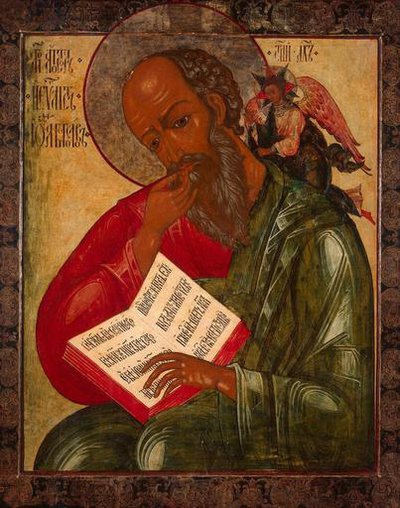
Peter turned and saw the disciple whom Jesus loved following them; he was the one who had reclined next to Jesus at the supper and had said, ‘Lord, who is it that is going to betray you?’ When Peter saw him, he said to Jesus, ‘Lord, what about him?’ Jesus said to him, ‘If it is my will that he remain until I come, what is that to you? Follow me!’ So the rumour spread in the community that this disciple would not die. Yet Jesus did not say to him that he would not die, but, ‘If it is my will that he remain until I come, what is that to you?’
This is the disciple who is testifying to these things and has written them, and we know that his testimony is true. But there are also many other things that Jesus did; if every one of them were written down, I suppose that the world itself could not contain the books that would be written.
(Lectionary, New Revised Standard Version)
Thoughts
And so we come to the end of the Gospel of John, and the period after Easter in our Church Calendar. Tomorrow we celebrate the coming of the Holy Spirit to the disciples at Pentecost. Perhaps it might therefore be helpful to summarise John's Gospel before leaving it behind for a while.
John's work has one central major theme - Jesus is the divine Son of God and the eternal Word made flesh, who reveals the Father to all who believe in Him, granting them eternal life. His Gospel is markedly different to the Synoptic Gospels (Matthew, Mark and Luke) in style, for instance he does not include parables that we might describe as "stories". Instead he centres his work around seven miracles that he calls "signs" and seven "I am" statements that describe Jesus and his work. John also includes the wonderful discourse from the Upper Room. Unlike the other Gospels who focus on the actions of Jesus he continually emphasises that Jesus is both fully man and fully God.
The Gospel uses words that contrast as picture images and are vivid reminders to us that we are to make a choice to "believe that Jesus is the Christ, the Son of God, and that believing you may have life in his name," or to reject this offer. Contrasts like light or darkness; life or death; love or hate; and truth or falsity, remind us continually of the choices that we are faced with when we learn about Jesus. If we are in danger of forgetting John's mission he mentions the word "believe" around 100 times.
Prayer
Father God,
we thank You that Your servant John
recorded the work of Your Son our Lord Jesus
who came to offer us salvation
when we believe in Him.
We thank You that John's written word
still inspires us today,
and that it continues to strengthen our faith.
Help us to use his Gospel to spread the Good News
to our family, our friends, and our neighbours.
Amen.
You might like to listen to the whole of John's Gospel:
- The Gospel according to John (read by Sir David Suchet)