Thoughts for the Day
Friday, 15th May 2026: Eastertide - John, 26
John 16 Son of God Jesus Christ Jesus 2nd Person of the Trinity Sign Intercession Eastertide
Reading : Verses from John, Chapter 16
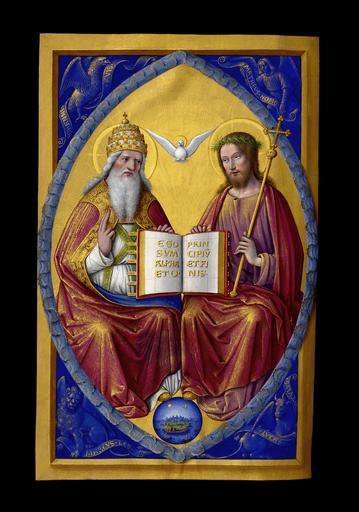
* Cover page of Anne of Brittany's 'Book of Hours', showing the Trinity.
Jesus said, 'Very truly, I tell you, you will weep and mourn, but the world will rejoice; you will have pain, but your pain will turn into joy. When a woman is in labour, she has pain, because her hour has come. But when her child is born, she no longer remembers the anguish because of the joy of having brought a human being into the world. So you have pain now; but I will see you again, and your hearts will rejoice, and no one will take your joy from you. On that day you will ask nothing of me. Very truly, I tell you, if you ask anything of the Father in my name, he will give it to you.
(Lectionary, New Revised Standard Version)
Thoughts
Today we often call Jesus by the name of 'Jesus Christ', as though the word 'Christ' was His surname, but of course this is not so. It comes from the the Jewish word for 'Messiah' which meant the 'Anointed One'. The Hebrew scriptures use this word for those anointed to high office, men like Saul and David. We still use anointing for this reason today and did so in Britain at the coronation of King Charles in 2023.
But in these same scriptures the term was also used for the person who would be the one who would save Israel from her enemies. In Greek this word is 'Christus' and is used as a title for God. So when we say 'Jesus Christ' we are giving a name and a title. We mean that He is the anointed Son of God, one of the three persons of the Trinity and fully God. When Lazarus is raised from the dead Martha says to Jesus "I believe you are the Christ, the Son of God, the one who is coming into the world" (John 11.27)
Our passage today from John 16 can be confusing for another reason. Why is Jesus telling the disciples to ask the Father in his name, but then adding he may not ask the Father? It doesn't seem to make a lot of sense, does it, but let's break up the sentence. When we turn to God the Father we are showing we know we need help and want His blessing. However, by asking in Christ's name we indicate we're unworthy to receive a favour from God the Father. Jesus ends this passage by saying that His intervention may not be needed, as the Father know how much we love His Son and because of this He loves us.
Prayer
Jesus Christ,
Son of God,
Second Person of the Trinity,
accept our unworthiness
when we turn to You.
Forgive our sin,
and in Your goodness hear us
and answer our prayer.
Amen.
Still confused? Then you could do worse than look at this "bitesize" GCSE explanation on the Trinity:
Or listen to this:
- Lord Jesus Christ (Saint Laurence's Church, Chorley)